













-
UNIVERSIDAD
- Presentación
- Órganos de gobierno unipersonales
- Órganos de gobierno colegiados
- Campus
-
Facultades y Escuelas
- Facultad de Ciencias de la Salud
- Facultad de Ciencias de la Comunicación
- Escuela Superior de Ciencias Experimentales y Tecnología
- Escuela Técnica Superior de Ingeniería Informática
- Escuela de Ingeniería de Fuenlabrada
- Escuela Internacional de Doctorado
- Escuela de másteres oficiales
- Facultad de Ciencias Jurídicas y Políticas
- Facultad de Ciencias de la Educación y del Deporte y Estudios Interdisciplinares
- Facultad de Ciencias de la Economía y de la Empresa
- Facultad de Artes y Humanidades
- Departamentos
- Unidades y Servicios Centrales
- Profesores e investigadores
- Institutos y Centros
- Centros Adscritos
- Sostenibilidad
- Calidad
- Canal Ético
- Alumni
- Alumni
- ESTUDIOS
-
ESTUDIAR EN LA URJC
-
Menu-Estudiar-En-La-Urjc (item1)
-
Pruebas de acceso
Estudios de grado
Movilidad
-
-
Menu-Estudiar-En-La-Urjc (item2)
-
Másteres
Doctorado
Formación Continua
-
-
Menu-Estudiar-En-La-Urjc (item1)
-
I+D+i
- Vicegerencia de Investigación e Innovación
- Centro de Apoyo Tecnológico (CAT) y RedLabU
- Unidad de Cultura Científica y de la Innovación (UCC+i)
- Servicio de Gestión Económica de la Investigación
- Contratación de Personal de Investigación
-
 Sello HRS4R
-
 Mentoría para la investigación Euriclea
- Centro de Atracción e Internacionalización del Talento Investigador (CAIT)
- Calendario de Convocatorias
- Investigación
- Innovación y transferencia
- Servicio de investigación
- OPE
- CINTTEC
- Programa propio investigación
- Proyectos I+D+i
- Ética de la investigación
- Comisión de Investigación
- INTERNACIONAL
- ACTUALIDAD



- 1
Lengua y Literatura Española + Traducción e Interpretación
Rama del conocimiento: Artes y Humanidades
Centro responsable: Facultad de Artes y Humanidades
Modalidad de impartición y Campus:
Presencial: Fuenlabrada
Créditos: 378 Créditos año: entre 72 y 78 Duración: 5 años. Implantación: progresiva
Calendario académico Horario Examenes Guías Docentes Profesorado
Coordinadores: Prof.ª Dr.ª D.ª Leticia González Corrales (Lengua y Literatura) y Prof.ª Dr.ª D.ª Beatriz Álvarez Tardío (Traducción e Interpretación)
Atención al estudiante: 91 665 5060. Buzón de Ayuda al Estudiante Buzón de sugerencias, quejas y felicitaciones
Imágenes

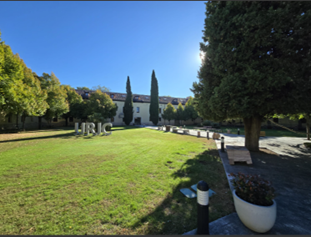
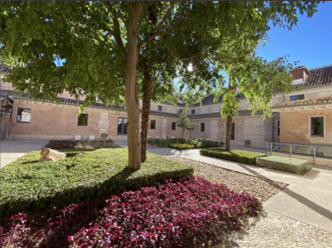

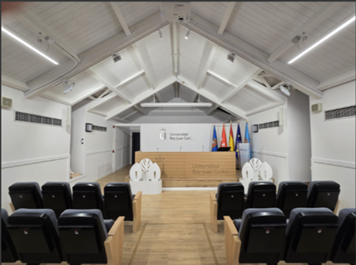
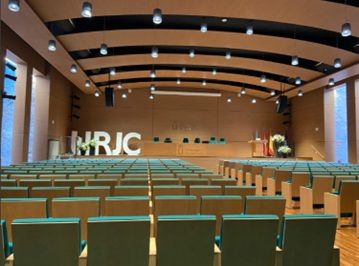



ORIENTACIÓN
Valoración de CRUMA del Acuerdo de Financiación Plurianual de las Universidades Públicas Madrileñas
La Conferencia de Rectores y Rectora de las Universidades Públicas de Madrid (CRUMA) considera que el acuerdo con la Comunidad de Madrid permite abordar la doble urgencia estratégica y financiera a la que se enfrentan las universidades y pide continuidad en el esfuerzo y coherencia en el tiempo.
CRUMA sostiene que el nuevo modelo abre el camino hacia un sistema universitario madrileño más fuerte, más estratégico y con mayor estabilidad.
RED DE COMUNICACIÓN URJC
RED DE COMUNICACIÓN URJC
Facultades y Escuelas
Otros Servicios y Unidades
La EID celebra con éxito de las V Jornadas de Internacionalización
La Escuela Internacional de Doctorado (EID) de la Universidad Rey Juan Carlos ha celebrado con éxito las V Jornadas de Internacionalización.
Prueba 1
texto prueba 1
El Hospital San Carlos, galardonado por el Comité Olímpico Español tras su colaboración con la URJC
El reconocimiento del COE refuerza la colaboración entre el Hospital Clínico San Carlos y la Universidad Rey Juan Carlos sobre la actividad física oncológica.
Empleabilidad
International Tourism Management
Center in charge: Facultad de Ciencias de la Economía y de la Empresa Campus: Campus de Madrid
Universities: Université de Savoie, Chambèry (Francia); Universitá degli Studi di Milano-Bicocca (Italia); Groupe Ecole Supereiure de Commerce de Troyes (Francia); Heilbronn University (Alemania),CATEDRA UNESCO - RED UNITWIN
For module III, Tourist Destination Management - UNESCO, a supplementary test is required to obtain the additional Diploma, according to conditions of the UNITWIN Network
Method of teaching: Presential (English) Cod: 6430. Old plan 6262
Credits: 60 ECTS Duration: One year
Taxes: See table
Academic calendar Schedule Exam Teaching Guides Professorate
Directora del Máster: D.ª Miriam Menchero Sánchez como Coordinadora: D.ª María del Pilar Pascual Fraile Teléfono: 91 4887703
E-mail:
Master Student information: Phone number: 91 488 8508
Atención al estudiante: Buzón de Ayuda al Estudiante Buzón de sugerencias, quejas y felicitaciones
Access and Enrolment
Normativa y procedimiento general de acceso
La información para el acceso y la admisión de estudiantes a los estudios de máster está disponible en: https://www.urjc.es/estudiar-en-la-urjc/admision/274-master
Igualmente, la normativa esta publicada en: https://www.urjc.es/estudiar-en-la-urjc/admision/274-master#normativa-de-masteres-universitarios
Criterios y procedimiento de admisión a la titulación
- La posesión de un título universitario oficial de Graduada o Graduado español o equivalente es condición para acceder a un Máster Universitario, o en su caso disponer de otro título de Máster Universitario, o títulos del mismo nivel que el título español de Grado o Máster expedidos por universidades e instituciones de educación superior de un país del EEES que en dicho país permita el acceso a los estudios de Máster.
- De igual modo, podrán acceder a un Máster Universitario del sistema universitario español personas en posesión de títulos procedentes de sistemas educativos que no formen parte del EEES, que equivalgan al título de Grado, sin necesidad de homologación del título, pero sí de comprobación por parte de la universidad del nivel de formación que implican, siempre y cuando en el país donde se haya expedido dicho título permita acceder a estudios de nivel de postgrado universitario. En ningún caso el acceso por esta vía implicará la homologación del título previo del que disponía la persona interesada ni su reconocimiento a otros efectos que el de realizar los estudios de Máster.
- Las universidades garantizarán una información transparente y accesible sobre los procedimientos de admisión, y deberán disponer de sistemas de orientación al estudiantado. Asimismo, asegurarán que dicha información y los procedimientos de admisión tengan en cuenta al estudiantado con discapacidad o con necesidades específicas, y dispondrán de servicios de apoyo y asesoramiento adecuados.
- Las universidades podrán excepcionalmente establecer, a partir de normativas específicas aprobadas por sus órganos de Gobierno, procedimientos de matrícula condicionada para el acceso a un Máster Universitario. Esta consistirá en permitir que un o una estudiante de Grado al que le reste por superar el TFG y como máximo hasta 9 créditos ECTS, podrá acceder y matricularse en un Máster Universitario, si bien en ningún caso podrá obtener el título de Máster si previamente no ha obtenido el título de Grado. Las universidades garantizarán la prioridad en la matrícula de los y las estudiantes que dispongan del título universitario oficial de Graduada o Graduado. En este procedimiento podrán ser tenidos en cuenta los créditos pendientes de reconocimiento o transferencia en el título de Grado, o la exigencia de superación de un determinado nivel de conocimiento de un idioma extranjero para la obtención del título.
- Las universidades o los centros regularán la admisión en las enseñanzas de Máster Universitario, estableciendo requisitos específicos y, en caso de ser necesarios, complementos formativos, cuya carga en créditos no podrá superar el equivalente al 20 por ciento de la carga crediticia del título. Los créditos de complementos formativos tendrán la misma consideración que el resto de los créditos del plan de estudios del título de Máster Universitario.
- Las universidades reservarán, al menos, un 5 por ciento de las plazas ofertadas en los títulos universitarios oficiales de Máster Universitario para estudiantes que tengan reconocido un grado de discapacidad igual o superior al 33 por ciento, así como para estudiantes con necesidades de apoyo educativo permanentes asociadas a circunstancias personales de discapacidad, que en sus estudios anteriores hayan precisado de recursos y apoyos para su plena inclusión educativa.
General Admission Requirements for Master's Degrees
According to Article 18 of Royal Decree 822/2021, dated September 28, which establishes the organization of university education and the quality assurance procedures, the general admission requirements for Master's degrees are as follows:
Possession of an official Spanish Bachelor's degree or equivalent is required to access a Master's degree. Alternatively, candidates may hold another Master's degree or qualifications equivalent to a Spanish Bachelor's or Master's degree issued by higher education institutions in the European Higher Education Area (EHEA), provided these qualifications allow access to Master's studies in the issuing country.
Candidates with qualifications from educational systems outside the EHEA that are equivalent to a Bachelor's degree may also access a Master's degree in the Spanish university system. This does not require the homologation of the degree but does require the university to verify that the level of education meets the necessary requirements, provided that the qualification allows access to postgraduate studies in the country of issuance. Access through this pathway does not imply the homologation of the candidate's prior degree or its recognition for any purposes other than pursuing the Master's studies.
Universities must ensure transparent and accessible information about admission procedures and provide guidance systems for students. They must also ensure that this information and the admission procedures consider students with disabilities or specific needs, offering appropriate support and advisory services.
Universities may, exceptionally, establish conditional enrollment procedures for Master's degree access based on specific regulations approved by their governing bodies. This allows students who have yet to complete their Bachelor's Final Project and up to a maximum of 9 ECTS credits to access and enroll in a Master's degree. However, they may not obtain the Master's degree without first completing the Bachelor's degree. Universities must prioritize enrollment for students already holding an official Bachelor's degree. Pending credit recognition or transfer in the Bachelor's degree, or the requirement to demonstrate a specific level of foreign language proficiency for obtaining the degree, may also be considered.
Universities or their respective faculties will regulate admission to Master's degree programs by establishing specific requirements and, if necessary, complementary training modules. These modules must not exceed 20% of the total credit load of the Master's program. The credits for these complementary modules will be treated the same as other credits within the Master's curriculum.
Universities will reserve at least 5% of the places offered in official Master's programs for students with a recognized disability level of 33% or higher, as well as for students with permanent educational support needs associated with personal disability circumstances, provided they required resources and support for full educational inclusion in their previous studies. Likewise, universities shall guarantee the availability of places for these students who apply for extraordinary university admission, until they reach 5 per cent of the reserve quota of the total number of places offered for that degree programme.
Full-time students will enrol for 60 credits in their first year of enrolment, while part-time students will enrol for between 24 and less than 60 credits in their first year of enrolment. In both cases, credits for supplementary training are excluded. Therefore, the minimum number of credits that a new student may enrol in during their first year is 24, and the maximum number is 60. Students who have failed subjects in previous years may enrol in a maximum of 78 credits, not including credits for subjects that constitute supplementary training. In each academic year in which the student formalises their enrolment, it will be compulsory to enrol in all outstanding subjects, understood as those subjects failed or not taken in previous years.
ADMISSION
The Universidad Rey Juan Carlos (URJC) does not have specific admission regulations; instead, it adheres to Article 18 of Royal Decree 822/2021, dated September 28. Each program establishes its general admission criteria and specific entrance tests.
However, according to the Regulations on Teaching Coordination Positions at Rey Juan Carlos University, approved by the University Governing Council on 19 April 2024, Article 4.11 that the process of ‘admission of students to official master's degrees’ is part of the functions relating to the academic planning of the degree and the Internal Quality Assurance System and that, therefore, the director or co-directors, together with the coordinator, are responsible for the admission process.
GENERAL ADMISSION CRITERIA:
The Master's in International Tourism Management serves as a continuation for students with a Bachelor's degree in Tourism, enabling career advancement and improved professional performance. However, the program is also open to students from other fields such as humanities, economics and business, law, anthropology, and sociology, providing these students with a specialization in tourism. Additionally, the Master's aims to offer a second chance for tourism professionals seeking to return to education to pursue better job opportunities or career advancement.
The specific degrees that facilitate access to the Master's include:
Bachelor's in Tourism and dual degrees combining Tourism with other disciplines.
With the successful completion of the specified complementary training, students with degrees such as Business Administration, Marketing, History, Engineering, Anthropology, Philology, Translation and Interpreting, Sociology, and others within the fields of Legal and Social Sciences, Humanities, and Arts may also access the program.
SPECIAL CONDITIONS OR ENTRANCE EXAMS:
If required, the evaluation of the applicant’s curriculum will consider:
Criterio “Academic Record”
The evaluation of the academic record will be based on the Official Degree and the Transcript of Records submitted by the student during the pre-enrollment process, which grant access to the master's program. As stated in the “General Admission Criteria,” the master's program is aimed at professionals in Tourism, as well as in other areas such as Legal and Social Sciences, Humanities, and Arts.

Criterio “Professional Experience” (30%)
Professional experience will be assessed based on the Curriculum Vitae submitted during pre-enrollment, distinguishing between “Professional experience in Tourism,” “Professional experience not in Tourism but related to the admission profiles,” “Professional experience not related to the admission profiles or Tourism,” and “No professional experience.”

Criterios “Languages” (20%) y “Others” (10%)

Language evaluation is based on the specific admission requirements for official master's programs at URJC, which require a minimum B2 level in the language of instruction for the master's program.
If the minimum required level is not accredited, the admission application will not be considered. If the minimum level is accredited, the “Languages” section will be scored with +20. A B2 level in Spanish will not be required for native Spanish speakers from Spain or Latin American countries where Spanish is the official language. In these cases, the score will be +20.
If the student provides an official certificate for a second language, it will be evaluated under the “Others” section, provided the second language meets the following criteria:
- Minimum B1 level in Spanish for the Master in International Tourism Management (English-taught version)
- Minimum B1 level in English for the Master in International Tourism Management (Spanish-taught version)
No specific tests are required beyond the personal interview to verify the merits provided in the student's pre-registration. The selection test process is determined by the Manual for the Management of the Self-Registration Process for University Master's Degrees, prepared by the School of Official Master's Degrees.
Thus, with a selection test:
This option will be selected if a specific test is to be given to applicants. The Master's Programme Management will determine the type of test to be given.
Once this option has been selected (...) the date and time of the Selection Test must be specified (on the platform). You must enter the date and time and, in the Comments field, any comments you deem appropriate.
Offer of a place: 25 places. If the course does not reach the minimum number of students, the University can choose not to open the teaching group.